How Does an Air Source Heat Pump Work?
Air source heat pumps represent a genuine step forward in home heating technology

If you've been looking into more efficient ways to heat your home, you've probably come across air source heat pumps. They're becoming increasingly popular in the UK, and for good reason. But how exactly do they work? Let's break it down in plain English.
The Basic Principle
Here's the thing about air source heat pumps that surprises most people: they don't actually generate heat. Instead, they move it from one place to another. Even when it's freezing outside, there's still heat energy in the air. An air source heat pump captures that energy and transfers it into your home.
Think of it like a fridge working in reverse. Your fridge takes heat from inside and pushes it out the back. An air source heat pump takes heat from outside and brings it indoors. Simple concept, clever engineering.
The Four Main Components
Every air source heat pump has four key parts that work together to make the magic happen.
The Evaporator is where it all starts.
This component contains a refrigerant that has a very low boiling point.
When outside air passes over the evaporator, the refrigerant absorbs heat and turns from a liquid into a gas.
This happens even in cold weather because the refrigerant boils at such a low temperature.
The Compressor is the heart of the system.
It takes that gas and squeezes it under high pressure. When you compress a gas, it heats up significantly.
This is basic physics, and it's what allows the system to create useful heating temperatures from cold outdoor air.
The Condenser is where the heat gets delivered to your home.
The hot, compressed gas passes through the condenser, which transfers that heat to your heating system.
This could be underfloor heating, radiators, or hot water.
As the refrigerant releases its heat, it cools down and turns back into a liquid.
The Expansion Valve completes the cycle.
It reduces the pressure of the liquid refrigerant, cooling it down even further before it heads back to the evaporator to start the whole process again.
Why They're So Efficient
This is where air source heat pumps really shine. For every unit of electricity they use to run the compressor and fans, they can deliver three to four units of heat. That's an efficiency rate of 300 to 400 percent.
Compare that to a traditional gas boiler, which typically runs at about 90 percent efficiency at best. Even the most modern condensing boilers can't match those numbers. This efficiency translates directly into lower running costs and reduced carbon emissions.
Different Types of Air Source Heat Pumps
There are two main varieties you'll come across.
Air-to-water systems are the most common in UK homes.
They heat water that circulates through your radiators or underfloor heating. They can also provide hot water for taps and showers, though you might need a larger hot water cylinder than you're used to.
Air-to-air systems work more like air conditioning in reverse.
They blow warm air directly into your rooms through wall-mounted units. These are less common in the UK because they don't provide hot water, but they can be effective in the right circumstances.

There are two main varieties you'll come across.
Air-to-water systems are the most common in UK homes.
They heat water that circulates through your radiators or underfloor heating. They can also provide hot water for taps and showers, though you might need a larger hot water cylinder than you're used to.
Air-to-air systems work more like air conditioning in reverse.
They blow warm air directly into your rooms through wall-mounted units. These are less common in the UK because they don't provide hot water, but they can be effective in the right circumstances.
What About When It's Really Cold?
This is the question everyone asks. Air source heat pumps work perfectly well in cold weather. Modern systems can extract heat from air as cold as minus 15 or even minus 20 degrees Celsius.
That said, they do become less efficient as temperatures drop. When it gets really cold, the system has to work harder to extract the same amount of heat. This is why proper sizing and installation is absolutely critical. An undersized system will struggle on the coldest days. An oversized one will cost more upfront and cycle on and off too frequently.
Installation Considerations
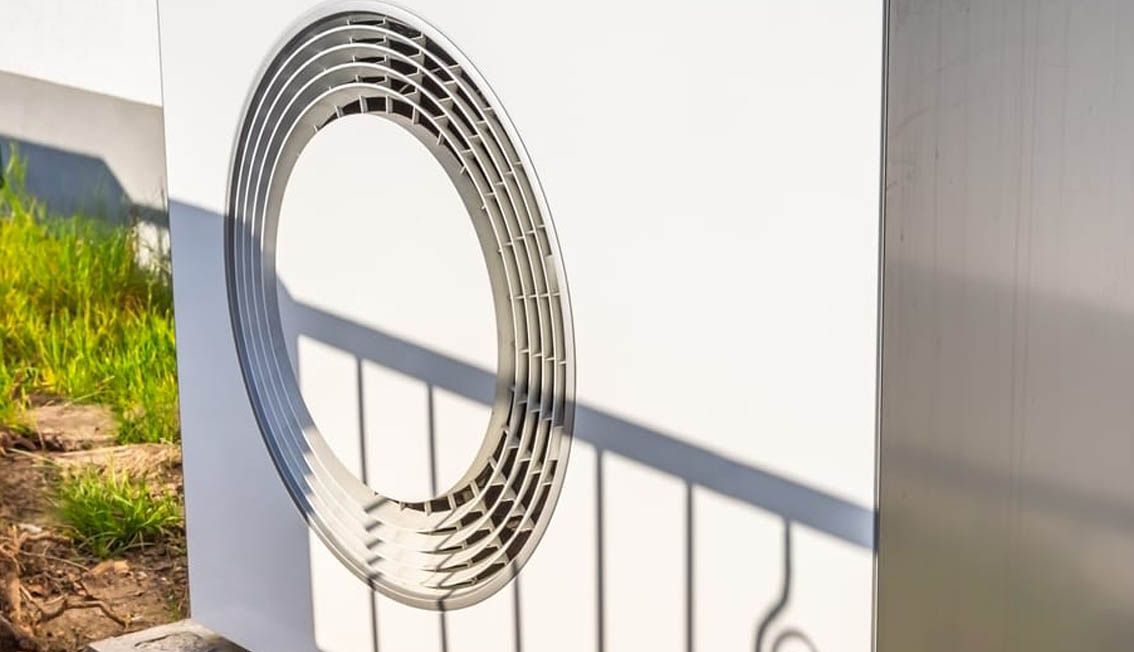
Installing an air source heat pump isn't quite as straightforward as swapping out an old boiler. The outdoor unit needs space and good airflow.
It will make some noise, though modern units are much quieter than older models.
Your home's insulation matters enormously. Heat pumps work best with lower flow temperatures than traditional boilers, which means they're ideal for well-insulated homes with underfloor heating or larger radiators.
If your home is draughty with single-glazed windows, you'll want to address those issues first.
You'll also need to think about your hot water cylinder.
Heat pumps typically heat water to lower temperatures than gas boilers, so you might need a larger cylinder to store enough hot water for your household.
Running Costs and Savings
The million-pound question: will it save you money? The honest answer is that it depends on several factors.
If you're replacing an old oil or LPG boiler, the savings can be substantial. If you're replacing a relatively new gas boiler, the savings are less dramatic but still worthwhile over time, especially as gas prices continue to rise.
Government incentives like the Boiler Upgrade Scheme can help with the upfront costs, offering grants of £7,500 towards installation. This makes the initial investment much more manageable.
The Environmental Angle
Even if you're not particularly worried about your carbon footprint, it's worth knowing that air source heat pumps are significantly cleaner than fossil fuel heating systems.
As the UK electricity grid gets greener with more renewable energy, heat pumps become even more environmentally friendly.
They're already responsible for far fewer carbon emissions than gas boilers, and that gap will only widen over time.
Is It Right for Your Home?
Air source heat pumps aren't a perfect fit for every property, but they work brilliantly in the right circumstances.
They're particularly well-suited to newer, well-insulated homes, properties with underfloor heating, and anywhere off the gas grid currently using oil or LPG.
If you're building a new home or doing a major renovation, it's definitely worth considering. For older properties, you might need to upgrade insulation and radiators first, but it can still be a viable option.
The Bottom Line
Air source heat pumps represent a genuine step forward in home heating technology. They're efficient, increasingly affordable, and much better for the environment than traditional heating systems.
The technology has matured significantly over the past decade. Early systems had their teething problems, but modern air source heat pumps are reliable, effective, and backed by solid warranties.
If you're thinking about making the switch, talk to a qualified installer who can assess your property properly. The right system, correctly installed, will keep your home warm and comfortable while reducing your energy bills and carbon emissions.
That's not a bad combination at all.
Calling All Gas, Plumbing & Electrical Engineers
If you're a Gas, Plumbing, or Electrical engineer looking to move into heat pump installation, now's the perfect time.
Thanks to government funding, GTA is offering free ASHP qualifications - and we handle all the paperwork for you, so there's no extra hassle.
Just be aware, this funding is only available until 31st March 2026, so you'll need to act quickly. Give us a call and secure your place while you can.
Already working as an ASHP installer? Why not take your expertise to the next level with our ASHP Design course at GTA?
Our state-of-the-art ASHP & GSHP training centres and experienced trainers make GTA the go-to place for top-quality heat pump training.
Get in touch with us today to find out more.
Please note:
Government funding for this course has now ended.